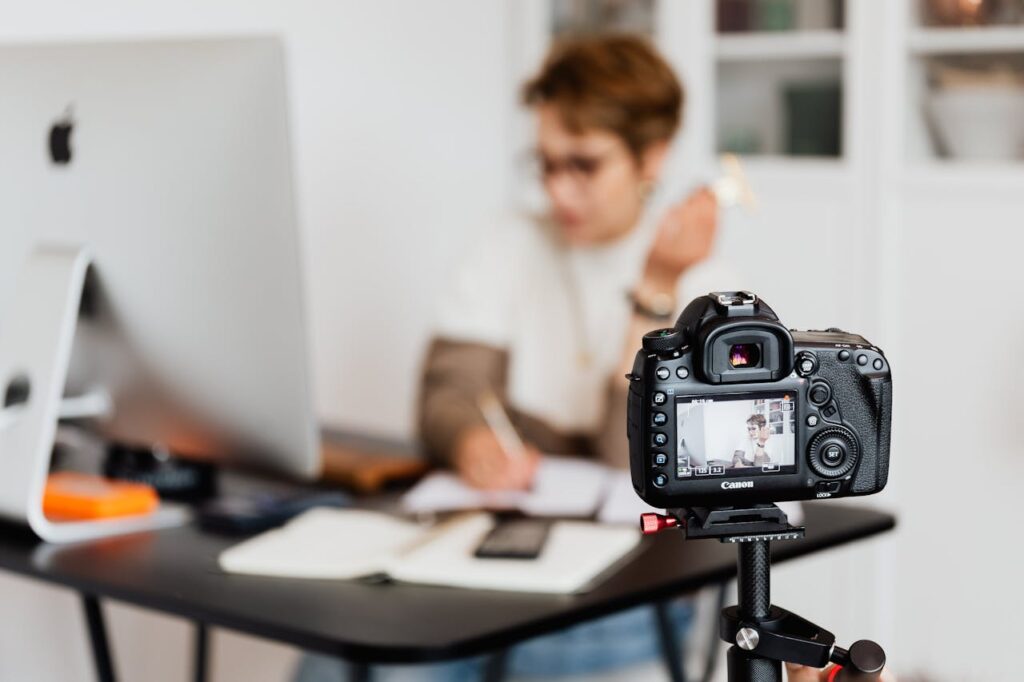
WHEN THE CAMERA DISAPPEARS
Covert Recording, Ray-Ban Meta Glasses, Consent, Privacy, the Law — and the Responsibility to Publish
S.M.A.C.C. — Social Media and Content Creators
For most of the history of photography and filmmaking, there was one fairly reliable way of knowing somebody might be recording you.
You could see the camera.
A photographer raised a camera to their eye. A television crew pointed a large video camera in your direction. Even the first generations of mobile-phone cameras normally had to be deliberately pointed towards their subject.
Smartphones changed that relationship.
Today almost everyone carries an extremely capable camera, and it isn’t always obvious whether somebody holding a telephone is filming, taking a photograph, reading a message or simply scrolling.
Now we are entering another era.
The camera itself is disappearing.
A pair of glasses can contain a high-resolution video camera, multiple microphones, speakers, storage, Wi-Fi, Bluetooth and artificial intelligence while looking remarkably similar to an ordinary pair of spectacles.
And that creates an important question for everyone involved in social media and content creation:
When the camera disappears, what happens to consent?
For S.M.A.C.C. — Social Media and Content Creators — this is not an argument against technology.
Wearable cameras have legitimate, innovative and sometimes extremely valuable uses.
The question is how we use them.
And, even more importantly, what we do with what they capture.
What exactly is covert recording?
Covert recording means capturing video, photographs or audio without the people being recorded being aware that recording is taking place.
The equipment doesn’t necessarily have to be physically hidden.
A smartphone sitting on a table could be recording.
A body camera could be concealed by clothing.
A miniature camera could be incorporated into an everyday object.
Someone could apparently be looking at their telephone while actually filming.
And increasingly, the camera can simply be incorporated into their spectacles.
There is also an important distinction between incidental recording and targeted covert recording.
Someone filming a travel video in Trafalgar Square cannot realistically obtain permission from every person who walks through the background.
That is fundamentally different from deliberately positioning yourself close to one identifiable individual and secretly recording them precisely because you do not want them to realise they are being filmed.
Purpose matters.
Location matters.
Method matters.
Expectation of privacy matters.
But above all:
Recording and publishing are two different decisions.
That distinction runs through everything that follows.
How did we get here?
Wearable cameras did not begin with Meta.
Miniature cameras have existed for decades, including specialist surveillance and investigative equipment.
Google Glass became one of the first serious attempts to combine a camera with wearable computing.
It demonstrated the possibilities.
It also demonstrated something else.
People behave differently when they believe the person looking at them might simultaneously be recording them.
Snap subsequently developed Spectacles, taking another approach to camera-equipped eyewear.
Then Meta partnered with one of the world’s best-known eyewear manufacturers.
Ray-Ban Stories appeared in 2021.
The crucial innovation wasn’t simply technical.
It was aesthetic.
They looked like Ray-Bans.
The technology subsequently developed into Ray-Ban Meta smart glasses.
Google Glass looked obviously technological.
Many specialist hidden cameras look like surveillance equipment when examined carefully.
Ray-Ban Meta glasses can look remarkably like normal spectacles or sunglasses.
That changes the social relationship between the camera and the subject.
What are Ray-Ban Meta glasses?
Current Ray-Ban Meta models contain considerably more technology than their appearance suggests.
Depending upon generation and model, the frames incorporate a camera, open-ear speakers, multiple microphones, internal storage, Bluetooth and Wi-Fi connectivity, physical and touch controls, rechargeable batteries and access to Meta AI.
Current Gen 2 specifications include still images at 3024 × 4032 pixels and video up to 2203 × 2938 pixels at 30 frames per second.
They can store hundreds of photographs and more than 100 short videos before transfer.
Recording can be started using a physical control.
It can also be started hands-free using voice commands.
That makes them genuinely useful content-creation equipment.
A chef can film while using both hands.
A mechanic can show work from their own viewpoint.
A cyclist can record a journey.
A traveller can capture an experience without constantly holding a telephone.
A creator working with animals can film naturally.
They offer something close to the wearer’s own point of view.
The same capability, however, creates the privacy concern.
The subject may see someone simply looking at them.
They may not immediately realise that the person looking at them has a camera at approximately eye level.
They are not independent of your phone
An important part of understanding Ray-Ban Meta is understanding the relationship between the glasses, the smartphone and Meta’s software.
The glasses are not simply a completely independent replacement for an iPhone or Android phone.
They work with both.
Current requirements include a compatible iOS or Android smartphone, Bluetooth, internet connectivity, a Meta account and the Meta AI app.
The relationship can broadly be understood as:
Glasses → Meta AI app → smartphone → other apps and services.
The glasses perform the immediate capture.
The phone and app provide much of the management.
The Meta AI app pairs the glasses with the phone, controls settings, manages software updates and AI functions, allows photographs and videos to be imported and provides the bridge between the glasses and the normal smartphone ecosystem.
Ordinary photographs and videos are not automatically posted to Instagram or Facebook simply because they were recorded on Meta glasses.
They can be transferred to the phone and then handled much like other media.
How long do they last?
Battery life has become increasingly important because it changes the nature of the product.
The earlier Ray-Ban Meta generation offered roughly four hours of moderate use.
Current Gen 2 models are rated at up to approximately eight hours of moderate use, with around five hours quoted for continuous audio streaming and voice assistance.
The charging case provides substantial additional power.
In practical terms, this means smart glasses are no longer necessarily something someone puts on specifically to make a short recording.
They can be worn for a significant part of the day.
Prescription versions make that even more important.
If somebody needs the glasses in order to see, the camera may simply be part of the spectacles they normally wear.
What tells other people that recording is taking place?
Meta has deliberately incorporated an external capture LED.
When conventional photographs or video are being captured, the light is intended to notify people nearby.
The wearer also receives their own indications that recording is occurring.
Meta has introduced safeguards intended to prevent straightforward obstruction of the capture indicator.
That is important.
Ray-Ban Meta glasses should therefore not simply be described as “spy glasses”.
The manufacturer has attempted to provide notice.
But a technical indication is not necessarily the same thing as meaningful awareness.
Most people understand immediately what somebody raising an iPhone and pointing it at them means.
Far fewer people necessarily understand what a small illuminated LED on the corner of someone’s spectacles means.
That distinction matters.
AI makes the question considerably more complicated
Smart glasses are no longer simply cameras.
The wearer can use AI to ask questions about what the glasses can see.
What is that building?
What does that sign say?
What plant am I looking at?
Translate this.
Describe what is in front of me.
This means the camera can provide information to an AI system without necessarily creating a conventional photograph or video intended for the user’s gallery.
And that creates an entirely new question:
If a computer looks at you, analyses you, but does not save a conventional video, have you been “recorded”?
For decades, society treated these concepts as virtually synonymous.
Camera operating meant recording.
Camera not operating meant not recording.
AI begins to separate seeing, analysing, processing, storing and publishing.
Future privacy law will increasingly have to distinguish between them.
Why this matters now
This is no longer a theoretical technology debate.
During 2026, concerns about AI wearables and camera-equipped smart glasses have intensified internationally.
Reuters reported in September on privacy concerns surrounding AI wearables, litigation concerning data handling and growing interest in devices deliberately designed without cameras or with more obvious recording controls.
The central problem is straightforward.
The more wearable computing becomes indistinguishable from ordinary clothing and eyewear, the harder it becomes for another person to know when technology is observing them.
What does British law actually say?
There is no single UK law saying:
“You must always obtain someone’s consent before photographing or filming them.”
Consequently:
No consent does not automatically mean illegal recording.
But the reverse is equally important:
Being in public does not give a creator unlimited freedom to record and publish anything they want.
Depending upon the circumstances, privacy law, data-protection legislation, harassment and stalking law, voyeurism and intimate-image offences, property law and other criminal or civil law can become relevant.
For creators there are therefore three separate questions:
1. Am I entitled to be where I am?
2. Am I entitled to record what I am seeing or hearing?
3. Am I entitled — and should I choose — to publish it?
Those questions can produce different answers.
Public does not mean permission is required for everything
Official UK policing guidance recognises the general principle that members of the public and media do not require a permit merely to photograph or film in public places, including public buildings and police personnel.
That freedom matters.
Without it, street photography, documentaries, citizen journalism, news reporting and enormous amounts of ordinary content creation would become impossible.
But it is only the beginning of the analysis.
How the photographer behaves can bring other laws into play.
Repeatedly following and targeting somebody is different from capturing them incidentally.
Sexualised or intimate recording is different from ordinary street photography.
Recording someone experiencing something genuinely private can raise different issues even if the photographer happens to be standing somewhere public.
And publication creates another legal and ethical decision altogether.
The S.M.A.C.C. Reasonable Consent Test
This is where S.M.A.C.C. believes creators need a simple practical test which goes beyond the bare minimum required by law.
Before publishing identifiable footage of somebody who did not knowingly consent, ask:
“If this person had understood how they were being filmed and how the footage was going to be used, would a reasonable creator expect them to object?”
That is better than simply asking:
“Would they have consented?”
Why?
Because nobody can reliably know what another person would have said.
And public-interest journalism cannot depend entirely upon the subject agreeing to publication.
A corrupt official would probably refuse consent to publication of evidence exposing corruption.
That refusal does not automatically make publication unethical.
The proper S.M.A.C.C. test therefore has a second part:
If a reasonable creator would expect the subject to object, what legitimate justification overrides that objection?
If there is none, don’t publish identifiable footage.
If there is a genuine public-interest justification, document it, minimise unnecessary intrusion and be transparent about how the material was obtained.
This is not a legal test.
It is a professional S.M.A.C.C. standard.
The dignity test
There should be another question.
“Does the audience actually need to see this?”
Imagine filming a serious road accident.
The camera records everything.
The approach.
The collision.
The aftermath.
An injured person.
Perhaps even somebody dying.
There may be a completely legitimate journalistic reason to report the accident.
There may be a legitimate reason to show footage immediately before the collision.
There may be a legitimate reason to explain what happened.
But that does not mean the audience needs to see a person’s final moments or their body lying in the road.
The camera may record it.
The responsible editor may choose not to publish it.
That editorial decision is fundamental.
It is why professional media organisations distinguish between possessing disturbing material and broadcasting it.
Content creators increasingly perform the same editorial function.
The absence of a traditional newsroom does not remove the responsibility.
Six situations — six different answers
| Situation | Recording position | Publication position | Main issues |
|---|---|---|---|
| Walking along a public street filming a travel video | Generally permissible. Incidental members of the public will inevitably appear. | Usually possible, but identifiable targeting, humiliation, private information or harmful context can alter the position. | Privacy, data protection where applicable, harassment, intimate-image law, dignity and proportionality. |
| Walking from the street into a pub while continuing to record | The legal context changes. The pub is private property open to customers subject to the occupier’s conditions. | Publication remains a separate question regardless of whether footage was captured before staff intervened. | Property rights, permission/licence to remain, trespass, privacy, data protection and establishment rules. |
| A parent recording the walk to primary school | Ordinary family filming on the public pavement is generally unremarkable. School premises can impose additional photography and safeguarding rules. | A private family video is fundamentally different from publicly uploading identifiable footage of unrelated children. | Household use, safeguarding, children’s privacy, school policy, public sharing. |
| Recording your own restaurant review while another table is captured | Restaurant permission and its filming policy matter. Incidental background capture differs from deliberately recording neighbouring diners. | Publishing another table’s intimate conversation presents a very different question from showing them incidentally in the background. | Private property, privacy, audio intrusion, personal information, proportionality. |
| Covertly recording evidence of serious wrongdoing | Potentially justifiable where genuinely necessary and proportionate for public-interest journalism. | Publication requires its own assessment. Irrelevant innocent people and private information should not automatically be exposed. | Journalism, public interest, privacy, data protection, necessity, proportionality, editing and redaction. |
| Police body-worn video recording someone who objects | Consent is not normally required simply because the person objects. Police recording operates within a different legal framework. | Police possession of footage does not mean unrestricted publication is permitted. | Policing powers, data protection, purpose limitation, retention, disclosure and accountability. |
The equipment could be identical in every example.
Context changes the answer.
The Wetherspoon example — public place or private property?
A pub is an excellent illustration.
It feels public.
Members of the public walk through the door.
But it remains private property.
Customers enter because the occupier permits them to enter, subject to lawful conditions.
Wetherspoon attracted attention in 2026 over its approach to Meta-style glasses.
Contrary to some shorthand descriptions, Wetherspoon did not simply announce that nobody could wear the glasses.
Its position is that customers and employees should not be filmed without permission and that the cameras in smart glasses should therefore be switched off.
A spokesperson told The Register that Meta glasses appeared to conflict with its existing rule because of their capacity for surreptitious recording.
That distinction is legally important.
Wetherspoon does not need Parliament to pass a specific “Ray-Ban Meta Act” before controlling filming inside its pubs.
An occupier can impose conditions upon people using private premises.
Permission to remain can be withdrawn.
Trespass is principally a civil concept in ordinary circumstances, although particular subsequent behaviour can engage other laws.
So:
Open to the public does not mean public property.
The pavement outside and the pub inside are legally different environments.
“But the pub is recording me”
This is the obvious counterargument.
Wetherspoon itself acknowledges that its pubs use CCTV for security purposes, while saying that its use is controlled by data-protection law.
And that illustrates the other side of this debate.
We are recorded constantly.
Shops record us.
Pubs record us.
Schools operate CCTV.
Doorbell cameras record passers-by.
Dashcams record roads and pedestrians.
Transport networks record passengers.
Police officers use body-worn video.
It would therefore be simplistic for S.M.A.C.C. to pretend that recording without individual consent is inherently unacceptable.
Often consent isn’t the legal basis being relied upon at all.
Organisations may rely upon other lawful bases appropriate to their circumstances.
But that does not mean their surveillance is unregulated.
Purpose matters.
Necessity matters.
Proportionality matters.
Transparency matters.
Security matters.
Retention matters.
Access matters.
Not requiring consent does not mean having no responsibilities.
Police body-worn cameras demonstrate the point
A police officer does not normally need someone’s permission before using body-worn video while legitimately exercising policing functions.
That may initially sound inconsistent with telling creators to think carefully about consent.
It isn’t.
The officer’s recording operates within a legal framework and for defined policing purposes.
Likewise, the police cannot simply take legitimate body-camera footage and publish it for entertainment because an officer thinks it will get views.
Again:
The right to record does not automatically create a right to publish.
That principle applies whether the camera belongs to a police officer, a business or a creator.
Children and schools make the distinction particularly clear
Suppose a parent wears camera glasses while walking their seven-year-old child to school.
The glasses record the journey.
Other families appear in the background.
They enter the school.
Other children become clearly identifiable.
The parent later considers uploading the footage publicly.
Several legal and ethical contexts have now overlapped.
Government guidance says photographs and video taken by parents for genuinely personal use will generally fall outside ordinary data-protection requirements.
But schools can still impose rules to prevent disruption, identification of protected children and safeguarding or welfare problems.
And public sharing changes the equation.
Government guidance specifically warns that parents publicly sharing photographs or video containing other pupils may bring data-protection considerations into play.
The school itself must also have a lawful basis when it takes, uses or publishes identifiable photographs and video. The July 2026 guidance emphasises lawful bases, transparency, opt-outs where applicable, safeguarding and responsible publication.
Again:
Taking the family video and publishing it to 500,000 followers are not the same act.
The restaurant conversation
Now imagine a creator recording a restaurant review.
The restaurant permits filming.
The creator records the food, décor and service.
But the microphones also capture the couple at the next table discussing a serious medical diagnosis.
The recording may have been incidental.
The conversation may be fascinating.
It may even make compelling content.
But ask the S.M.A.C.C. Reasonable Consent Test:
If those people knew their private conversation was going to be broadcast to thousands of strangers, would a reasonable creator expect them to object?
Almost certainly.
Then ask:
What legitimate justification overrides that objection?
If the answer is merely:
“It makes a great video,”
S.M.A.C.C. would not regard that as sufficient.
Remove it.
Voyeurism, humiliation and exploitation
The same reasoning becomes even stronger where filming is sexualised, voyeuristic, humiliating or deliberately exploitative.
The current S.M.A.C.C. Code already addresses this directly.
Rule 22 says members must not engage in covert, hidden or deceptive filming, particularly where people are targeted in ways they would reasonably object to.
Its examples include hidden cameras focused on bodies or clothing, sexualised filming without awareness or consent and street content deliberately designed to prevent subjects realising they are being recorded.
That wording is remarkably close to the Reasonable Consent Test above.
The Code’s existing key principle is essentially:
If someone would reasonably object to being filmed in that way, and concealment is being used because the creator knows that, the conduct breaches the Code.
That is exactly the right starting point.
But there must be a public-interest exception
There is one area where S.M.A.C.C.’s present Code should be clarified.
Rule 22 currently says intentionally concealed filming breaches the Code.
Taken absolutely literally, that could prohibit legitimate undercover journalism.
That is not the position S.M.A.C.C. should adopt.
Imagine exposing:
serious fraud;
abuse;
corruption;
dangerous working practices;
criminality;
systematic discrimination;
or another significant matter of public interest.
Warning the subject that they are being recorded may make gathering the evidence impossible.
The ICO’s journalism guidance recognises that covert surveillance and recording are particularly intrusive, but the relevant considerations include proportionality, whether less intrusive methods could achieve the journalistic purpose, the strength of the public interest and potential harm.
That is the model S.M.A.C.C. should follow.
Covert recording should therefore be exceptional rather than casually normalised.
But exceptional does not mean prohibited.
The S.M.A.C.C. Covert Recording Test
Where a creator proposes deliberately concealed recording, S.M.A.C.C. should expect them to answer five questions:
1. PURPOSE — Why does this need to be recorded?
2. CONCEALMENT — Why does the subject need to be unaware?
3. ALTERNATIVES — Could the legitimate objective reasonably be achieved in a less intrusive way?
4. PUBLIC INTEREST — What genuine public interest justifies overriding the likely objection?
5. PUBLICATION — Which parts does the audience actually need to see?
The fifth question is critical.
A legitimate justification for recording three hours of material does not necessarily justify publishing three hours of material.
Perhaps three minutes demonstrate the wrongdoing.
The remaining footage may contain innocent customers, children, private telephone numbers, personal conversations and people completely unrelated to the investigation.
Blur them.
Remove them.
Redact them.
Protect them.
Public-interest recording does not abolish editorial responsibility.
Transparency after covert recording
S.M.A.C.C. should go further.
Where a creator publishes material that was recorded covertly, or where identifiable subjects may reasonably not have realised recording was taking place, the creator should normally declare that fact.
We suggest the following term:
NON-NOTIFIED RECORDING
This is deliberately more neutral and precise than calling everything a “hidden camera”.
A non-notified recording is:
Material recorded where an identifiable subject was not expressly informed of the recording and may reasonably have been unaware that recording was taking place.
That includes some camera-glasses footage without automatically implying criminality or wrongdoing.
Where such footage is materially important to a publication, a S.M.A.C.C. creator should consider a disclosure such as:
“This report contains non-notified recording. The subjects were not informed at the time that recording was taking place and consent to publication was not obtained. We have published the material because [brief reason].”
If covert equipment was deliberately used, say so.
If AI materially generated or altered the content, say so.
If faces were blurred, say so where relevant.
If material was reconstructed, say so.
If consent was obtained afterwards, say so.
The principle is straightforward:
Tell the audience how the content was made.
This is consistent with Rule 1 of the existing S.M.A.C.C. Code, requiring honesty and transparency, and Rule 4, requiring appropriate labelling of staged, satirical or AI-generated material.
And there is a useful ethical test behind it:
If you would be uncomfortable telling your audience openly how you obtained the footage, you should seriously question whether you should be publishing it.
What if someone is dying?
This demonstrates why publication standards must go beyond legal minimums.
A creator records a catastrophic incident.
The camera captures a person being killed.
The footage may be genuine.
It may be newsworthy.
It may even provide important evidence.
But none of those facts automatically means the public needs to watch the person’s death.
A responsible editor may show the events leading to the incident and stop before the fatal impact.
They may describe what happened afterwards rather than showing it.
They may obscure identifying details.
They may consider the dignity of the victim and the effect upon relatives who could encounter the footage online.
This is not censorship.
It is editorial judgement.
Traditional broadcasters have long had editorial systems that force somebody to make these decisions.
Social media has removed the newsroom from many creators.
It has not removed the responsibility.
“It will get views” is not public interest
Something being interesting to the public is not necessarily in the public interest.
People may be fascinated by someone’s humiliation.
That does not create a public-interest justification for secretly filming it.
Views are not public interest.
Clicks are not public interest.
Virality is not public interest.
Monetisation is not public interest.
Public interest involves something more substantial: exposing wrongdoing, informing an important debate, protecting people, demonstrating matters of legitimate social significance or performing another genuine journalistic function.
Creators should understand the difference.
How does this fit the existing S.M.A.C.C. Code?
It fits remarkably well.
The current Code contains 23 principles and expressly says that it exists to ensure trust, accountability and professionalism. Members must acknowledge the Code, and failure to comply can result in loss of Verified status.
Several rules apply directly.
Rule 1 — Honesty and transparency.
Creators must not mislead audiences about how content was produced.
Rule 3 — Harmful or illegal content.
Creators must not publish or promote harmful, exploitative or illegal material.
Rule 4 — AI and staged-content disclosure.
Audiences should be able to distinguish reality from artificial, staged or synthetic material.
Rule 6 — Privacy and safety.
People must not be exposed, exploited or placed at risk for content. The Code specifically suggests blurring faces where consent is unclear and exercising additional caution around children, schools, hospitals and vulnerable people.
Rule 8 — Consent.
Consent should be informed, meaningful and respected, particularly in sensitive or private situations. The Code expressly recognises that legal filming and ethical filming are not always identical.
Rule 11 — Corrections and accountability.
Creators should correct mistakes responsibly.
Rule 12 — Verified status.
The S.M.A.C.C. Verified logo and ID may only be used while a member remains in good standing.
Rule 16 — Representation of S.M.A.C.C.
Members are ambassadors for the standard.
Rule 17 — Law and platform rules.
Creators remain responsible for understanding local filming, privacy and platform requirements.
And finally:
Rule 22 — Covert or exploitative filming.
This is the rule directly aimed at the subject of this article. It prohibits hidden, deceptive or exploitative targeting of people who would reasonably object.
Together, these rules already create a substantial ethical framework.
What we need now is a small clarification to Rule 22 recognising genuine public-interest covert journalism and introducing the transparency principle for non-notified recording.
S.M.A.C.C. membership should mean something
This brings us to the larger reason S.M.A.C.C. exists.
Anyone can open a social-media account.
Anyone can call themselves a content creator.
Anyone can publish to potentially millions of people.
Traditional broadcasters and publishers developed editors, complaints departments, codes, regulators, professional standards and identifiable organisations partly because publishing carries responsibility.
The creator economy has grown faster than an equivalent professional accountability structure.
S.M.A.C.C. is intended to help fill that gap voluntarily.
A S.M.A.C.C. member is not saying:
“Everything I publish is perfect.”
They are saying:
“I have agreed to professional standards, I am identifiable, and I accept accountability for my work.”
That distinction matters.
What happens when somebody thinks a S.M.A.C.C. member has crossed the line?
There needs to be a route back.
S.M.A.C.C.’s verification system already provides for members of the public or other creators to challenge the conduct of a verified member.
The published S.M.A.C.C. verification framework provides for a complaint/report process, a right of reply for the member and possible outcomes including no further action, a caution, suspension of Verified status and ultimately revocation of membership for serious or repeated breaches.
That is the real significance of verification.
A badge without accountability is decoration.
A badge connected to:
identity + standards + complaints + investigation + consequences
means something considerably more.
If someone believes a S.M.A.C.C. member has covertly filmed them, unfairly exposed them, misrepresented how footage was obtained or published material contrary to the Code, they should be able to report it to S.M.A.C.C.
The member should have a right of reply.
Evidence should be considered.
And if the Code has seriously or repeatedly been breached, S.M.A.C.C. can withdraw the status that tells the public that person remains in good standing.
That is self-regulation.
Why should the public trust a S.M.A.C.C. member?
Not because S.M.A.C.C. guarantees that every member will always make the correct editorial decision.
No professional organisation can promise that.
Trust comes from something different:
standards and accountability.
A S.M.A.C.C. creator has agreed to a published Code.
The public can read it.
The creator’s status can be checked.
A complaint can be raised.
The creator can answer it.
The organisation can investigate.
And Verified status can ultimately be withdrawn.
That creates something social media badly needs:
A route from the content back to an accountable creator.
The drone comparison
There is an interesting precedent in another area of modern camera technology.
Drones.
In Britain, many drone operators must register with the Civil Aviation Authority.
Where an Operator ID is required, it must be displayed on the aircraft. Current CAA rules also require registration in specified weight/camera categories, and newer classes of drone are moving towards electronic Remote ID capable of transmitting identity information.
Why?
Because society decided that powerful technology operating in shared spaces should have an accountable operator behind it.
S.M.A.C.C. believes the creator industry should consider the lesson before government decides it for us.
We are not suggesting that today’s law requires every person holding a camera to register with S.M.A.C.C.
It does not.
We are making a different argument.
Professional and serious creators should voluntarily identify themselves with a recognised standard.
A S.M.A.C.C. Verified ID can perform a similar professional function:
Here is who stands behind this content.
Here are the standards they agreed to follow.
Here is their current status.
And here is where you go if you believe those standards have been breached.
That is far preferable to anonymous publishing followed eventually by compulsory regulation designed by people outside the creator community.
Self-regulate — or eventually be regulated
This is the larger issue.
Smart glasses will become more capable.
Cameras will become smaller.
AI will become better at understanding what cameras see.
Audio recording will become easier.
Devices will increasingly disappear into clothing, eyewear and everyday objects.
At the same time, individual creators can distribute material globally within seconds.
If the creator industry responds to every ethical question with:
“It’s legal, so I can do it,”
we should not be surprised when governments eventually respond:
“Then we will decide what you can do.”
S.M.A.C.C. believes there is a better route.
Creators themselves can establish professional standards.
We can distinguish responsible journalism from exploitation.
We can protect legitimate freedom to film.
We can acknowledge that not every person incidentally appearing in public footage needs to sign a consent form.
We can defend genuine investigative journalism.
We can use extraordinary new technology.
And simultaneously we can say:
There are things responsible creators should not publish simply because they can.
The S.M.A.C.C. pre-publication test
Before publishing footage involving someone who may not have knowingly consented, ask:
Would a reasonable creator expect this person to object if they understood how they were filmed and how this footage will be used?
If no, publication may be relatively uncontroversial, subject to the law and other circumstances.
If yes or possibly, ask:
What legitimate reason justifies overriding that objection?
Then:
Does the audience need to identify them?
Could the face be blurred?
Could private audio be removed?
Could identifying details be withheld?
Could consent be obtained afterwards?
Is a child or vulnerable person involved?
Could publication cause disproportionate distress, humiliation or danger?
Is this genuinely in the public interest, or merely interesting to the public?
Finally:
Would I be comfortable telling the subject and my audience exactly how and why I obtained this footage?
If the answer to that final question is no, reconsider publication.
And if you publish covertly obtained material — disclose it
Where non-notified recording materially contributes to a publication, S.M.A.C.C. believes responsible creators should normally disclose that fact.
A simple notice may be enough:
TRANSPARENCY NOTICE: This report contains non-notified recording. Some subjects were not informed at the time that recording was taking place and consent to publication was not obtained. We have included the material because [reason].
Where appropriate, also disclose:
where it was recorded;
approximately when;
why covert or non-notified recording was necessary;
whether consent was subsequently sought;
whether identities were protected;
whether AI materially generated or altered any content;
and
whether reconstruction or editing materially changes what the audience is seeing.
Transparency does not magically make unethical filming ethical.
But secrecy about the method should not be piled on top of secrecy in obtaining the footage.
The future question may no longer be “Are you recording me?”
AI wearables make the traditional question increasingly inadequate.
Future glasses may translate conversations.
Recognise objects.
Provide navigation.
Describe environments to people with impaired vision.
Identify products.
Summarise meetings.
Remember locations.
Answer questions about what the wearer sees.
And potentially maintain continuous contextual awareness.
The future question may therefore become:
“What is the computer you are wearing doing with what it can see and hear?”
That question involves considerably more than cameras.
It involves processing.
Storage.
Cloud services.
AI.
Retention.
Recognition.
Disclosure.
And accountability.
Law will continue to evolve.
Technology will continue to evolve faster.
Professional ethics therefore matter enormously.
The camera is not the ethical decision-maker
Ray-Ban Meta glasses are remarkable technology.
Future generations will be considerably more capable.
Manufacturers have responsibilities.
Visible indicators matter.
Anti-tamper systems matter.
Privacy controls matter.
Data-retention policies matter.
Local processing may increasingly matter.
Platforms have responsibilities when technology is used systematically to generate abusive or exploitative content.
Regulators have responsibilities.
But there is one safeguard no manufacturer can build into the frame of a pair of glasses:
The judgement of the creator.
For S.M.A.C.C., that is where professional content creation begins.
Record responsibly.
Protect people who do not need to be exposed.
Distinguish journalism from voyeurism.
Distinguish public interest from public curiosity.
Tell audiences when AI materially changes what they are seeing.
Tell them when significant material was obtained without the subject knowing.
Be prepared to explain your editorial decisions.
And accept accountability when you get them wrong.
Because professional content creation should mean more than owning a camera and having followers.
It should mean being prepared to put your identity behind your work.
It should mean accepting standards.
And it should mean giving the people affected by your content somewhere to go if they believe those standards have been breached.
That is why S.M.A.C.C. believes voluntary professional identification and accountability should develop before governments decide that compulsory identification and regulation are necessary.
The drone industry already demonstrates the principle that powerful camera technology can have an identifiable, accountable operator.
The creator industry should not wait until it is forced into the same position.
We can do it ourselves.
We can protect creative freedom precisely by demonstrating that we are capable of using that freedom responsibly.
Freedom to Film. Responsibility to Publish.
S.M.A.C.C.
Social Media and Content Creators
Serious creators. Identifiable standards. Real accountability.
This article discusses the position principally in England and Wales and is intended as general information and S.M.A.C.C. professional guidance, not individual legal advice. Laws and regulatory requirements differ internationally and can change.